_REV.webp)
2026 Customer Journey Mapping Guide and Examples
By Jacob Butko
Account Director
Connect with me on LinkedIn
Live behavioral insights that drive performance and growth
TrueVoice Growth Marketing has redefined how customer journey maps are built, activated, and optimized. Through our proprietary TrueVoice ACCESS™ system—a real-time behavioral intelligence framework designed for regulated industries and complex buying groups—we apply live customer signals to shape accurate customer profiles and journey strategy.
This approach enables our clients to achieve measurable growth and performance above industry benchmarks by aligning marketing, sales, and customer experience around real customer behavior and intent.
In this guide, we explore how customer journey mapping must evolve to move beyond static diagrams and become an active, growth-driving capability.
A step-by-step guide to effective customer journey maps
In today’s hyper-fragmented marketing environment, customer journey maps have become a cornerstone of growth strategy. Yet despite their importance, most journey maps fail to deliver the impact they promise. They often become static diagrams—useful for planning but nearly impossible to activate across siloed departments, outdated systems, and incomplete data environments.
For highly regulated industries, these challenges are amplified. Complex customer paths, strict compliance constraints, fragmented legacy systems, and organizational silos make it extraordinarily difficult to build the accurate, dynamic, behavior-driven journeys modern growth requires.
We've created this 2026 customer journey mapping guide and examples to help regulated industries navigate and understand what it takes to successfully map the customer journey, and to shed light on what a modern customer journey map should include - not only understand the customer's perspective across the user journey, but enhance the customer experience through practical and actionable insights that drive measurable results and growth outcomes.
What is a customer journey map?
A customer journey map is a visual representation of how a customer engages with a company, encompassing all the customer touchpoints and interactions across digital and physical channels. It tracks steps, actions, thoughts and customer emotions at each touchpoint. A successful customer journey map provides valuable insights that help businesses understand their customers' perspectives to identify pain points and optimize experiences to drive growth and enhance customer satisfaction.
Journey mapping is often the first strategic step a business can take to view their brand through the eyes of the buyer and to make data-driven decisions to enhance the customer experience. From initial awareness to customer loyalty, a well rounded journey map remains focused on the perspective of the buyer across different stages, and molds itself to customer needs as pain points are discovered and resolved.
Why is customer journey mapping important?
Customer journey mapping is important because it helps organizations understand the real experience customers have across every stage of their relationship with a brand. When done well, it creates clarity, alignment, and direction for how to improve both the customer experience and business outcomes. As a result, 79% of companies say their maps have allowed them to become more customer-centric.
The core reasons a customer journey map matters
It reveals real customer behavior
A journey map shows the steps customers take, what they think and feel, and where they get stuck. This helps teams replace assumptions with real insight.
It exposes friction and pain points
Mapping the journey makes it easy to identify moments that frustrate customers, stall progress, or cause drop-off so you know exactly where to improve.
It creates alignment across teams
Marketing, sales, service, and product often operate in silos. A journey map gives everyone a shared view of the customer and a common strategy to follow.
It informs better messaging and content
By understanding what customers need at each stage, teams can create more relevant content, more timely messages, and more effective engagement.
It enables more personalized and consistent experiences
Journey maps help organizations deliver the right interactions at the right moments, improving satisfaction, loyalty, and conversion.
It helps connect customer experience to business results
Clear visibility into each touchpoint and stage makes it easier to tie improvements to metrics like engagement, conversion, retention, and revenue.
It is foundational for automation and personalization
Modern automation depends on understanding behaviors, motivations, and intent. A journey map provides the structure needed to deliver personalized, dynamic experiences.
A well-built customer journey map gives organizations a clearer, more accurate picture of how customers move, decide, and engage. It replaces guesswork with insight, aligns teams around a shared view of the customer, and provides the foundation for more personalized, effective experiences. When companies understand the full journey, they can remove friction and pain points, strengthen messaging, improve conversions, and ultimately deliver a customer experience that drives measurable growth.
The difference between a customer journey map and the marketing funnel
A customer journey map and a marketing funnel are often confused, but they serve very different roles.
A journey map captures the real experience a customer has with your brand from their first interaction through long-term engagement. It focuses on what customers actually think, feel, and do across every touchpoint.
A marketing funnel is a strategic model that outlines how a company guides people toward becoming customers through stages like awareness, consideration, and conversion.
Although different, a customer journey map and the marketing funnel work together to convert more prospects into leads and more leads into revenue while creating a smoother, more intentional experience at every step. The funnel defines the stages a company wants people to move through, and the journey map reveals how customers actually navigate those stages. When used together in a growth marketing framework, they help teams align strategy with real behavior so messaging, content, and touchpoints feel more relevant and effective.
Why most customer journey maps fail to drive action
The challenge with traditional customer journey maps is that they’re snapshots in time—and they get outdated quickly.
Teams invest in workshops and cross-functional collaboration to document the customer experience, align on expectations at each touchpoint, and define what “should” happen across the journey.
But even after all that work, most maps still fall short. They rarely reflect real-time behavior, they’re difficult to maintain, and they don’t provide the guidance teams need to decide what message to use, which channel to prioritize, or how to coordinate engagement across the funnel. The result is a static diagram that describes the experience, but doesn’t help anyone improve it.
Traditional journey maps break down in the real world
Previous approaches fail because most journey maps can’t identify which prospects are actively in-market—or where they are in their decision journey. They’re treated as static planning exercises rather than dynamic growth systems, and optimization often focuses on channel performance instead of outcomes across the full experience.
What’s missing is live behavioral intelligence that reflects how people actually research, evaluate, and decide in real time
- Disjointed customer experiences lead to lower conversion and retention.
- Static, assumption-based maps create messaging misalignment across marketing, sales, and service.
- Lack of real-time insights causes organizations to react too slowly.
- Ineffective automation results in wasted spend, irrelevant outreach, and diminished ROI.
- Linear, one-dimensional journeys ignore the multi-touch, multi-input, contextual decision-making that modern customers actually engage in.
Many companies view a customer journey map as a final deliverable, when in fact, its real value is only realized when it is built dynamically, with the ability to adjust based on evolving customer behaviors, expectations and outcomes.
Insufficient and static customer intelligence
Most teams want to build effective journey maps. What they lack is accurate, timely, granular, behavioral and intent-based customer intelligence across the entire funnel.
Instead, they rely on:
- Outdated CRM fields
- Partial behavior signals
- Incomplete persona assumptions
- Siloed automation data
- Inconsistent departmental interpretations of "the customer"
This results in journey maps that break the moment real customers deviate from the assumed path—and automation programs that fail to adapt.
Lack of measurement and outcomes not tied to business objectives
- Without clear objectives for each touchpoint, teams can’t tell what each moment is supposed to achieve.
- When touchpoints aren’t tied to KPIs, it’s impossible to see which interactions add value and which fall short.
- Without measurable goals, no team feels accountable for performance across the journey.
- Prevents teams from prioritizing improvements based on real impact.
Without success indicators at every interaction, the journey remains theoretical and never becomes truly actionable.
How to create a customer journey map
Building an effective customer journey map requires more than plotting out steps on a diagram. It demands a deep, accurate understanding of how customers behave, what they expect, and which interactions meaningfully shape their decisions. Traditional approaches—interviews, workshops, and static documentation—can help outline the experience, but they rarely capture the full picture. Modern journeys are fluid, nonlinear, and influenced by countless signals across channels and moments.
To design journeys that actually drive growth, organizations need to anchor their mapping process in real customer behavior, not assumptions. That means using dynamic insights to understand not just what customers say they do, but what they actually do as they move through complex paths.
This is where the next evolution of journey mapping begins.
Modern growth requires modern intelligence
Organizations need a real-time, contextual understanding of:
- Who the customer is
- What they are doing in the moment
- Where they go to solve problems
- What content, topics, and channels influence them
- How they move across micro and macro journeys
- What behaviors and intent signals indicate readiness or risk
This level of intelligence is not static. It must evolve continuously as customers search, compare, evaluate, and navigate across multiple channels and touchpoints. Modern buyers do not follow a predictable or linear path. They move fluidly, shifting between research and evaluation, digital and human interactions, and multiple devices or platforms.
To keep pace, organizations need intelligence that updates as behavior changes, detects shifts in intent, and reveals the moments where guidance, content, or support can meaningfully influence the outcome. Without this adaptive view, even the most carefully built journey map becomes outdated the moment it is finished.
Modern intelligence turns customer personas and journey mapping into a living system that can guide real decisions, power personalized engagement, and drive measurable growth.
Understanding the true voice of your customer
Modern journey mapping improves when it’s anchored in observable behavior—not assumptions, anecdotes, or outdated CRM fields. That’s the role of TrueVoice ACCESS™: a proprietary, real-time behavioral intelligence system built for regulated industries and complex buying groups.
TrueVoice ACCESS™ continuously synthesizes live market signals—what audiences engage with, search for, compare, and prioritize—so teams can build profiles and journeys that reflect how buyers actually move.
Turning Live Behavior Into Actionable Growth Intelligence
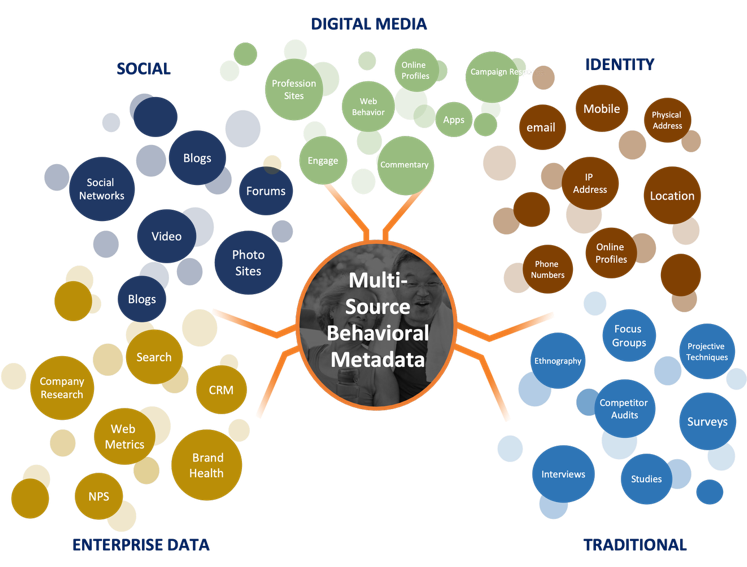
TrueVoice Access integrates and aggregates:
- Billions of behavioral signals from public and professional sources
- Real-time engagement activity across 350M+ outlets
- AI-powered profiling to continuously evolve buyer understanding
This creates living prospect profiles that reflect:
- Business pressures and priorities
- Information consumption patterns and channel preferences
- Readiness to engage and decision-stage indicators
With this foundation, teams can design micro-journeys (interest spikes, research behaviors, comparison moments) and macro-journeys (nurture, onboarding, retention) that stay relevant over time—because they adapt as behavior changes.
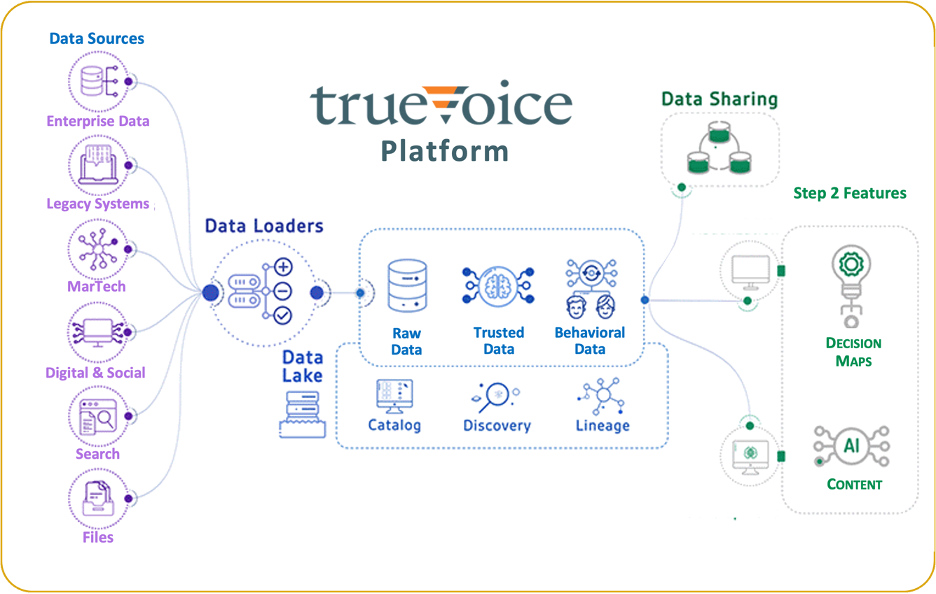
A clear path from intelligence to growth
TrueVoice ACCESS™ helps organizations coordinate marketing, sales, and service around a shared, real-time view of the buyer—so journeys become easier to activate, easier to optimize, and more directly connected to measurable outcomes.
Companies finally gain the ability to coordinate marketing, sales, and service around a single source of behavioral truth.
From Access to outcomes: how modern journey mapping becomes actionable
A journey map becomes a growth driver when it follows a clear progression:
- Access: capture live behavioral signals across the buyer journey
- Insight: interpret what those signals mean (stage, needs, friction, intent)
- Strategy: define what to say, where to show up, and what to prioritize
- Activation: orchestrate consistent, timely experiences across channels and teams
- Outcome: measure impact on conversion, retention, velocity, and revenue
- Scalability: repeat, refine, and expand what works across segments and journeys
This is how journey mapping moves beyond documentation and becomes a system teams can apply across marketing, sales, and customer experience.
Why this matters now
Customer expectations now evolve faster than internal teams can react. Regulations will tighten. Data access will shrink. Silos will persist. And static journey maps—no matter how visually appealing—will continue to underperform.
But organizations that embrace real-time, behavior-led, contextual journey intelligence will:
- Deliver cohesive multi-touch experiences
- Unlock measurable revenue across the funnel
- Activate step-by-step journeys with confidence
- Improve conversion and retention
- Gain a sustainable competitive advantage
TrueVoice is proving this every day across financial services, healthcare, manufacturing, technology, and government.
Contact us today to drive growth with customer journey maps built on real-time audience insights
Contact us to move beyond static journey maps and start activating real-time, behavior-led journeys that improve conversion, retention, and lifetime value.
Frequently asked questions about creating a customer journey map
Do regulated companies need a customer journey map?
Regulated industries require the outcomes that journey mapping delivers. In sectors like finance, insurance, manufacturing, and government, journey maps play a critical role in demonstrating compliance, mitigating risk, and ensuring fair and consistent customer treatment. By visualizing every touchpoint, highlighting pain points, and standardizing how customers should be engaged, journey mapping becomes an essential tool for delivering reliable, compliant experiences at scale.
What is a future state journey map?
A future state journey map is a visual blueprint of the ideal customer journey an organization wants to create. Instead of documenting how customers interact with the brand today, it outlines what the journey should look like once gaps are fixed, new capabilities are implemented, or improvements are made. Future state maps help teams align on a shared vision, prioritize enhancements, and design an experience that is more seamless, efficient, and customer-centric than the current state.
What are the best customer journey mapping tools?
Before choosing a customer journey mapping tool, it helps to shift your mindset away from the tool itself and toward the outcomes you want to achieve. The most effective journey maps are not the ones with the most features. They are the ones that clearly show which touchpoints matter most, where friction exists, and which moments are worth personalizing.
Rather than going all in with a complex platform, start small. Map a single journey or a single segment. Identify the interactions that truly influence decisions. Test improvements, learn from real behavior, and build a culture that values test and learn experimentation over perfection.
Once you understand the outcomes you need—clarity, alignment, insight, and action—you can confidently evaluate your approach based on what will help you achieve those results. If you start with the right mindset and a focus on measurable outcomes, selecting the right solution becomes much easier.
How do you decide which customer journeys to invest in?
Prioritize mapping, personalizing, automating, and optimizing a customer journey when the lifetime value (LTV) of that customer is high enough to justify the customer acquisition cost (CAC) required to win and nurture them. If a customer is worth a lot over time, it makes sense to build a detailed, highly personalized journey for them. If a customer has low lifetime value, it usually doesn’t make sense to spend significant time and money creating a complex or highly customized journey, and a basic customer journey map may be sufficient. Go deep where it pays off. Stay lightweight where it doesn’t. Whichever direction you go, an experienced growth marketing agency can help.
Practical tips for mapping the entire customer journey
Map outcomes first, focus on the moments that matter, and go deep only where the value justifies the effort. That’s how journey mapping becomes a growth tool, not a wall artifact.
Start with clear business goals
Don’t try to map everything. Anchor the journey to a specific goal such as reducing churn, improving conversion, increasing adoption, or shortening time-to-value. A journey map without a question becomes a diagram with no owner.
Define the journey from the customer’s point of view
Map what customers actually do, not what your organization thinks should happen. Use customer language, real actions, and observable behaviors. If a step can’t be validated with data or research, treat it as a hypothesis.
Map stages, then moments
Start broad with awareness, consideration, onboarding, usage, support, renewal and brand loyalty.
Then zoom in on the moments that matter most like decision points, friction, and emotional highs and lows. You don’t need depth everywhere to get value.
Identify only the touchpoints that influence outcomes
Not every interaction deserves equal attention. Prioritize touchpoints that meaningfully impact conversion, retention, or satisfaction. This keeps the map usable and prevents over-engineering.
Layer in customer intent, emotion, and barriers
For each key step, ask:
- What is the customer trying to accomplish?
- What are they feeling?
- What could block them from moving forward?
These insights are where journey maps turn into action.
Validate with real inputs and customer feedback
Use a mix of customer data and quantitative data such as interviews, surveys, support tickets, product usage data, funnel metrics, and CRM notes. If teams disagree on a step, that’s a signal to test, not debate.
Assign ownership to moments, not journey stages
Journeys break down when everyone owns it. Assign clear ownership to critical moments like the first value moment or renewal risk signals so insights actually lead to change.
Be cautious of using a customer journey map template
A good journey map informs messaging, content strategy, channel prioritization, and personalization rules. If should be specific to your business to business model and reflect the touchpoints that matter. Customer journey map examples can help, but your user journey map should be unique to your customer personas and their interactions with your brand.
Treat the journey as a living model
Customer behavior changes. Products evolve. Markets shift. Revisit and update your journey regularly so it reflects reality, not last year’s assumptions.

.webp)